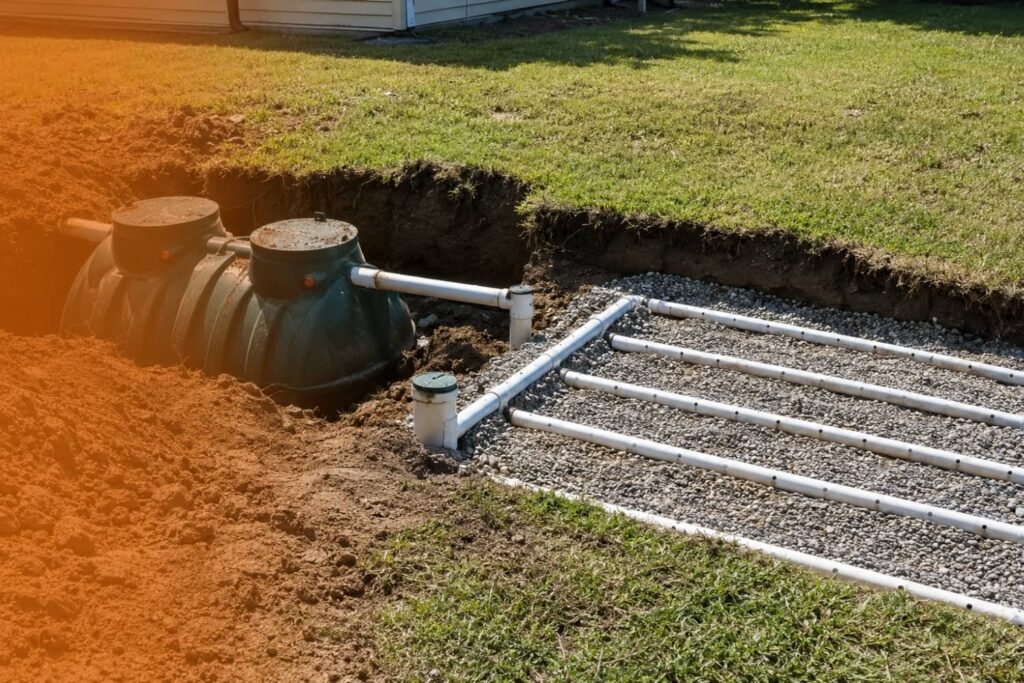
This guide explains what a septic clean out is, how it differs from routine pumping, common signs that a clean out may be needed, and why addressing problems early helps protect the entire system. It is written to help Tampa Bay homeowners recognize when maintenance is no longer enough, and professional service becomes important.
Septic systems rarely fail without warning. Most problems develop gradually as waste builds up, flow slows down, or components stop working the way they should.
Many homeowners are familiar with septic pumping, but fewer understand what a septic clean-out is or when it becomes necessary. Because the signs are often subtle at first, issues can go unnoticed until backups, odors, or system damage occur.
What a Septic Clean Out Actually Is
A septic clean-out is a service focused on clearing blockages, buildup, or flow restrictions within the septic system or connected lines.
Unlike routine septic pumping, which removes accumulated solids from the tank, a clean-out addresses obstructions that prevent wastewater from moving properly through the system. This may involve clearing inlet or outlet pipes, distribution components, or sections of the drain field, depending on the issue.
Septic clean-outs are typically performed when there are signs of restricted flow, recurring backups, or system stress that pumping alone does not resolve.
Septic Clean Out vs Septic Pumping
Understanding the difference between these services helps homeowners avoid confusion and delays.
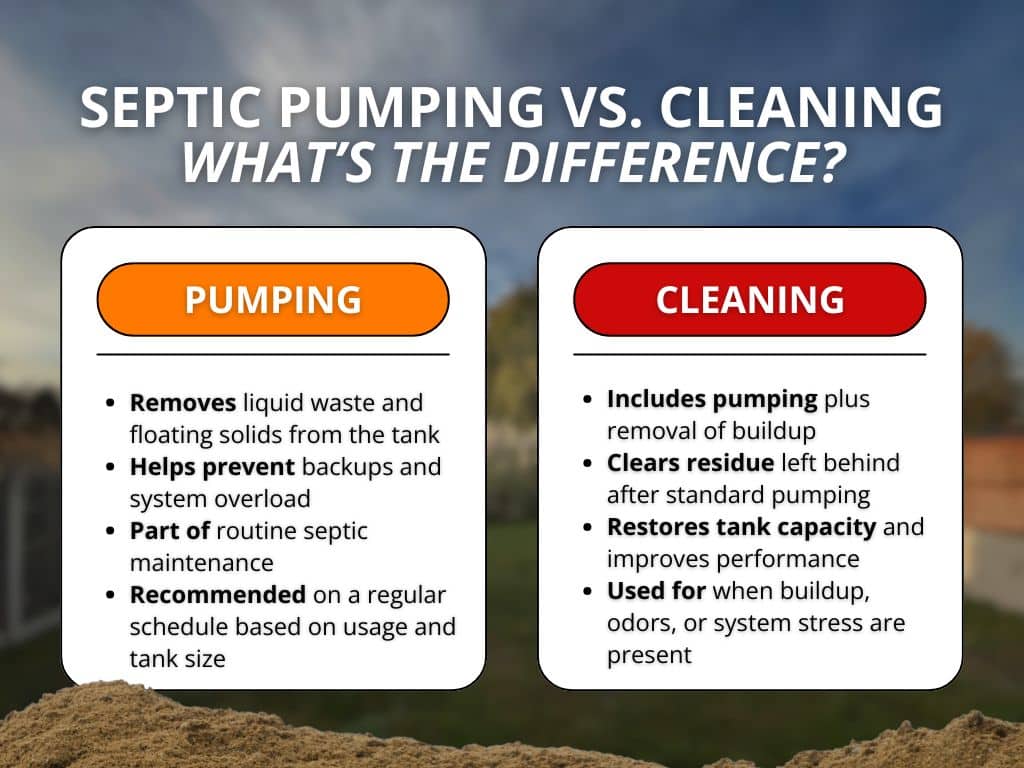
Septic pumping is scheduled maintenance. It removes sludge and scum from the tank to prevent overfilling and protect downstream components.
A septic clean-out is corrective. It restores flow when something is interfering with how wastewater moves through the system.
In simple terms:
- Pumping maintains capacity
- Clean-outs restore movement
Both services are important, but they serve different purposes. When flow problems are present, pumping alone may not solve the issue.
Why Septic Systems Develop Flow Problems
Septic systems are designed to move wastewater gradually through multiple stages. When any part of that process slows down, pressure builds elsewhere in the system.
Common causes of flow restriction include long-term buildup, improper disposal habits, and aging components. Over time, even well-maintained systems can develop areas where waste or debris accumulates.
Factors that commonly contribute to flow problems include:
- Excessive grease or solids entering the system
- Infrequent pumping
- Tree root intrusion near pipes
- Soil compaction or drain field stress
- Older systems with narrower piping
Once the flow is restricted, symptoms often appear throughout the home.
Signs You May Need a Septic Clean Out
Many homeowners notice early warning signs but are unsure what they mean.
A septic clean-out may be needed when the system shows signs of resistance or backup rather than simple capacity issues.
Common indicators include:
- Slow drains throughout the home
- Gurgling sounds in plumbing fixtures
- Sewage odors indoors or outdoors
- Wastewater backing up into sinks or tubs
- Standing water or soggy areas near the drain field
These symptoms often indicate that wastewater is struggling to move through the system as intended.
Ignoring these signs can allow pressure and damage to spread beyond the initial blockage.
Why Waiting Makes Septic Problems Worse
Septic issues rarely improve on their own.
When flow is restricted, wastewater has fewer places to go. Pressure builds upstream, which can damage pipes, overwhelm the tank, or stress the drain field. What starts as a partial blockage can turn into a system-wide failure if left unaddressed.
Delayed service can lead to:
- More extensive clean-out requirements
- Increased risk of drain field damage
- Emergency backups inside the home
- Higher repair or replacement costs
Addressing flow issues early is one of the most effective ways to extend system life.
How Tampa Bay’s Environment Affects Septic Systems
Local conditions play a significant role in septic system performance.
In the Tampa Bay area, sandy soils, seasonal heavy rains, and high groundwater levels can all influence how septic systems drain. Excess moisture in the soil can reduce absorption and increase stress on drain fields.
These conditions make it especially important to address flow restrictions promptly. When wastewater cannot disperse efficiently, even minor blockages can create noticeable problems inside the home.
Professional evaluation helps determine whether issues are isolated or influenced by environmental factors.
What Happens During a Septic Clean Out
A septic clean-out begins with identifying where the restriction exists.
Technicians evaluate system access points, flow patterns, and visible symptoms to locate the source of the problem. Depending on findings, the service may involve clearing pipes, removing buildup, or addressing obstructions near the tank or distribution components.
The goal is to restore proper movement through the system, not just remove waste from the tank.
Clean-outs are often paired with pumping when necessary, but the focus remains on resolving the specific cause of restricted flow.
How Clean Outs Help Protect the Drain Field
The drain field is one of the most vulnerable and expensive parts of a septic system.
When flow is restricted, wastewater may back up or overload the drain field. Over time, this can cause soil saturation, reduced absorption, and permanent damage.
A septic clean out helps by:
- Relieving pressure before it reaches the drain field
- Preventing solids from moving into the field lines
- Supporting even wastewater distribution
- Reducing the risk of premature drain field failure
Protecting the drain field is a key reason clean-outs are so important.
When Pumping Alone Is Not Enough
Some homeowners schedule pumping expecting it to resolve slow drains or backups. In certain cases, symptoms return shortly after.
This often happens when the underlying issue is not tank capacity, but restricted flow elsewhere in the system.
Situations where pumping alone may fall short include:
- Recurring slow drainage
- Blockages near the inlet or outlet pipes
- Root intrusion affecting lines
- Distribution issues beyond the tank
In these cases, a clean out addresses the actual cause rather than the symptom.
How Often Are Septic Clean Outs Needed?
There is no fixed schedule for septic clean-outs.
Unlike pumping, which follows a general maintenance interval, clean-outs are performed based on system behavior and conditions. Some systems may never require a clean-out if the flow remains unrestricted and maintenance is consistent.
Others may need service due to age, usage patterns, or environmental factors.
Regular inspections help identify developing issues before clean-outs become urgent.
Preventing Future Septic Flow Problems
While not all issues can be prevented, good habits significantly reduce risk.
Homeowners can support healthy system flow by:
- Scheduling routine pumping as recommended
- Avoiding grease, wipes, and non-degradable items
- Limiting excess water usage
- Keeping heavy vehicles off the drain field
- Addressing plumbing issues promptly
Preventive maintenance reduces the likelihood of needing corrective services.

When to Call a Septic Professional
Septic clean-outs are not a DIY task.
Professional service is needed when symptoms indicate restricted flow or when backups begin affecting the home. Waiting often allows problems to spread and increases repair costs.
Calling a septic professional makes sense when:
- Drains slow throughout the house
- Odors persist despite basic maintenance
- Backups occur repeatedly
- Wet areas develop near the drain field
Early intervention protects both the system and the home.
How Tampa Bay Septic Approaches Clean Outs
Tampa Bay Septic provides trusted full-service septic care for homes throughout the Tampa Bay area.
Their approach focuses on identifying the root cause of septic problems rather than applying one-size-fits-all solutions. Services include inspection, pumping, clean-outs, repairs, and system maintenance.
By addressing flow issues early and thoroughly, Tampa Bay Septic helps homeowners avoid emergencies and extend the life of their septic systems.
Related Questions to Explore
Is a septic clean-out the same as pumping? No. Pumping removes waste from the tank. Clean-outs restore flow when blockages exist.
Can slow drains mean septic problems? Yes. When multiple drains are slow, septic flow issues may be present.
Do clean-outs damage the system? No. When performed professionally, clean-outs protect system components.
How long does a septic clean-out take? Timing depends on the issue, but most services are completed in a single visit.