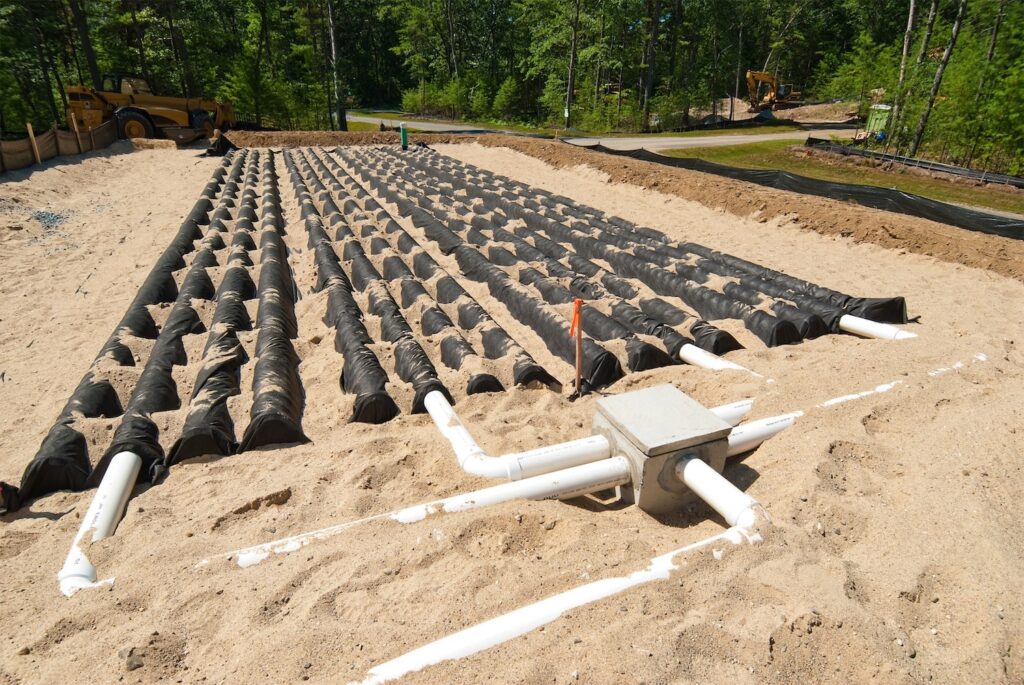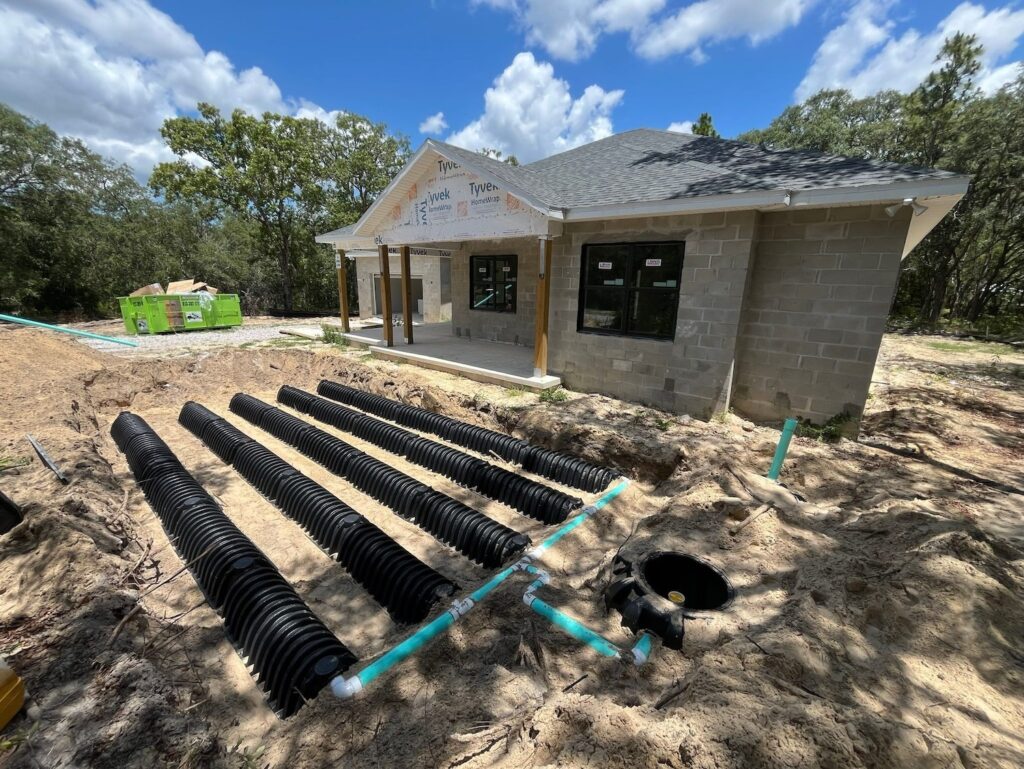
A lift station is a small pump chamber that moves wastewater uphill when gravity alone cannot do the job. Plenty of Tampa Bay homes have one, and most owners do not find out until an inspector points it out or an alarm starts buzzing in the side yard.
This guide covers what a lift station is, how it works, the parts inside it, why so many Florida lots need one, the problems that show up most often, and how to keep yours running. You will also find a maintenance schedule and answers to the questions homeowners ask most. Tampa Bay Septic services lift stations throughout the Tampa Bay area, so the advice here comes from real service calls.
How a Septic Lift Station Works
A lift station works by collecting wastewater until it reaches a set level, then pumping it uphill through a pressurized pipe. The cycle repeats every time the water rises high enough.
Step by step, this is what happens:
- Wastewater leaves your house and flows into the septic tank, where solids settle out.
- The liquid that remains, called effluent, flows into the lift station basin.
- The water level in the basin rises. A float switch rides at that level like a bobber on a fishing line.
- When the float reaches its trigger point, it tells the pump to turn on.
- The pump pushes the effluent up through a discharge pipe toward the drainfield.
- A check valve keeps that water from sliding back down into the basin.
- The level drops, a second float shuts the pump off, and the basin waits for the next cycle.
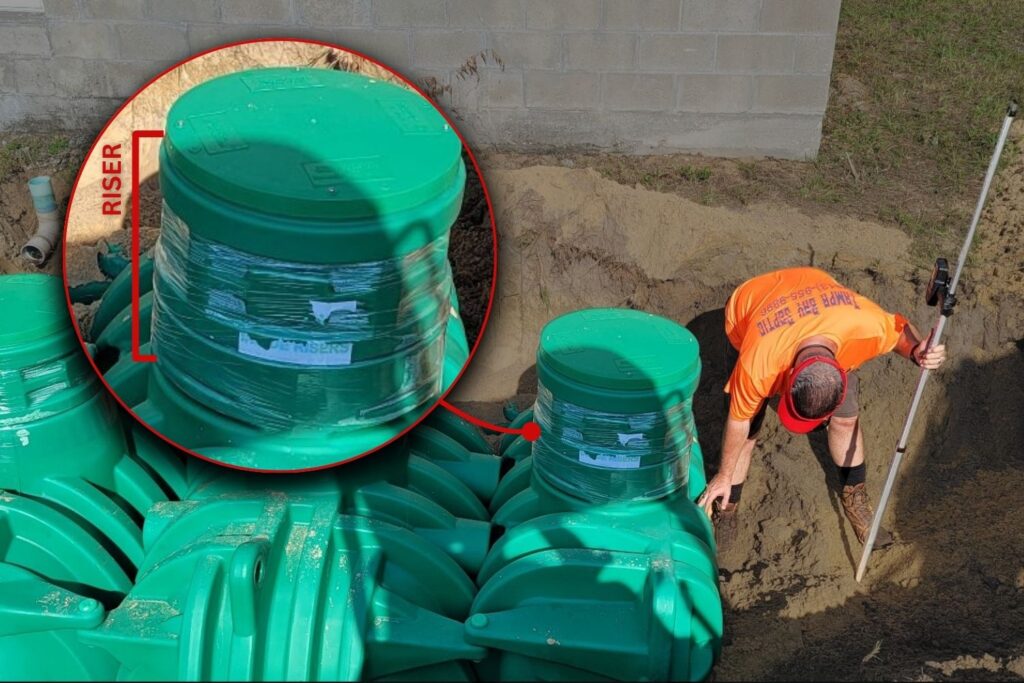
Most residential lift stations usually run for one to three minutes at a time and cycle several times a day. You should barely notice it. If you hear the pump running constantly or never at all, something is wrong.
However, some properties place the lift station between the house and the septic tank instead. In that setup, the pump handles raw sewage rather than filtered effluent, and it needs a different kind of pump built to pass larger solids.
Parts of a Lift Station and What Each One Does
A lift station has six or seven working parts, and almost every service call traces back to one of them.
- Basin (wet well). The tank itself is usually fiberglass, polyethylene, or concrete. It holds wastewater between pump cycles.
- Pump. A submersible pump sits at the bottom of the basin. Residential units are commonly one-third to one-half horsepower.
- Float switches. Small floats that turn the pump on and off as the level changes. These are the most common failure points in the whole station.
- High-water alarm float. A separate float set above the others. It does not run the pump. Its only job is to warn you that the water is climbing when it should not be.
- Control panel. The box on the wall or post nearby. It houses the breaker, the alarm, and often a run light.
- Check valve. A one-way gate in the discharge line. Without it, everything you just pumped uphill drains right back down.
- Discharge pipe (force main). The pressurized line that carries effluent to the drainfield or the next stage of the system.
In addition, larger or commercial stations add guide rails, a second pump for backup, and more advanced controls. On a home system, the list above is usually the whole picture. To see how these pieces fit into the bigger setup, read our breakdown of the parts of a septic tank every homeowner should understand.
Lift Station vs. Septic Tank vs. Sewage Ejector Pump
These three get mixed up constantly, so here is a side-by-side look at what each one actually does.
| Component | What it does | Moving parts? | Handles solids? | Typical location |
|---|---|---|---|---|
| Septic tank | Separates and breaks down solids | No | Yes, it holds them | First stop after the house |
| Lift station (effluent pump) | Moves filtered liquid uphill | Yes, pump and floats | Small particles only | After the septic tank |
| Sewage ejector pump | Moves raw sewage uphill | Yes, pump and floats | Yes, larger solids | Before the septic tank |
| Grinder pump | Chops solids, then pumps them long distances | Yes, blades and pump | Yes, it grinds them | Long runs or shared lines |
The practical takeaway: an effluent pump is not built to pass raw sewage. Putting the wrong pump in the wrong spot is a fast way to burn out a motor, and it happens more often than it should.
When a Tampa Bay Property Needs a Lift Station
Generally, a property needs a lift station any time the wastewater has to travel to a point higher than where it starts. In Florida, that comes up far more often than most homeowners expect.
Common reasons a lift station gets installed here:
- The drainfield sits uphill from the house. Sometimes the only usable soil on the lot is on higher ground.
- The lot is flat. A septic pipe needs a slope of about one-quarter inch per foot to move on its own. A pancake-flat Florida lot often cannot deliver that over a long run.
- The system uses a mound or a filled drainfield. These are built up above natural grade, so the effluent has to be pushed up into them.
- The home has a below-grade bathroom or laundry. Fixtures below the main drain line need a pump to connect to it.
- The tank is far from the house. Long runs eat up all the available fall.
Why the Florida water table forces the issue
The water table is the reason mound systems are so common around Tampa Bay. State septic rules require a layer of dry, unsaturated soil beneath a drainfield so wastewater gets treated before it reaches groundwater. When the wet-season water table sits close to the surface, the only way to get that separation is to raise the drainfield. Raise the drainfield, and you need a pump to reach it.
The scale of this is easy to underestimate. Roughly 30 percent of Florida residents are served by onsite septic systems, and University of Florida research on Florida septic systems and groundwater notes that close to 40 percent of the state’s systems sit in coastal areas where the wet season water table is likely to be shallow.
Sandy soil adds another wrinkle as well. It drains fast, which sounds good, but fast drainage plus a high water table means less filtering distance, and that pushes designs toward elevated drainfields. Outside Florida, the same pumped-versus-gravity choice shows up under houses instead of beside them, as this comparison of the difference between a sump pump and a French drain explains.
If you are buying a home and are not sure what you are getting, a proper inspection will tell you. Here is what gets checked during a septic inspection.
Common Lift Station Problems
Most lift station failures come from four sources: a stuck float, a worn pump, a clog, or lost power. Here is how each one shows up.
Float switch failure
Floats are simple, but simple parts still fail. Grease coats them, debris tangles the cords, or the switch inside wears out. A float stuck in the down position means the pump never turns on and the basin fills. A float stuck up means the pump runs nonstop and burns out. Either way, the fix is inexpensive if you catch it early.
Pump failure or short cycling
Of course, pumps wear out. Most residential lift station pumps last somewhere around 10 to 20 years, and heavy use shortens that. Short cycling, where the pump kicks on and off every few minutes, usually points to a bad check valve letting water drain back or a float set too tight. Short cycling wears a pump out fast, so it is worth chasing down.
Clogs from things that should not be there
Wipes are the biggest offenders, including the ones labeled flushable. Grease, feminine products, paper towels, dental floss, and cat litter all cause the same problem. They wrap around the impeller or jam the discharge line. What goes down your drains matters more with a pumped system than with a gravity one, because there is a motor waiting to choke on it.
Power loss and electrical damage
In short, no power means no pump. The basin becomes a holding tank, and you have roughly one tank’s worth of buffer before wastewater has nowhere to go. Florida storms make this a real seasonal risk. Corrosion is the slower version of the same problem: humidity and hydrogen sulfide gas eat at wiring, terminals, and control panel components over the years.
Solids and sludge buildup in the basin
Because solids carry over, even an effluent pump chamber collects some sludge over time, especially if the septic tank ahead of it is overdue for pumping. Buildup shortens pump life and can bury the floats. This is one more reason tank pumping schedules matter, and it is worth knowing how often to pump a septic tank in Florida.
Lift Station Maintenance Tips
Lift station maintenance means checking the moving parts on a schedule instead of waiting for the alarm. Systems with pumps and float switches need more attention than plain gravity systems, and EPA guidance on caring for your septic system recommends yearly professional inspection for systems that have them.
| How often | What gets checked | Who does it |
|---|---|---|
| Monthly | Listen for the pump cycling, confirm the alarm light looks normal, and look for wet spots or odors near the basin | Homeowner |
| Every 3 months | Visual check of the control panel, lid seal, and surrounding ground | Homeowner |
| Every year | Full inspection: pump amp draw, float operation, alarm test, check valve, wiring, sludge level | Licensed professional |
| Every 3 to 5 years | Septic tank pumping, plus basin cleanout if solids have accumulated | Licensed professional |
| After any major storm | Electrical inspection before the pump goes back into service | Licensed professional |
Habits that extend pump life
Habits that extend the life of your lift station:
- Keep wipes, grease, and hygiene products out of your drains. All of them.
- Spread out laundry loads instead of running six on a Saturday. Surge flow overworks the pump.
- Keep the lid clear and never park or drive over the basin.
- Do not plant shrubs or trees near the station. Roots find their way in.
- Know where your control panel is and what a normal alarm light looks like.
- Test the alarm once a year so you know it actually works.
Above all, that last one matters. An alarm you have never heard is an alarm you might ignore. Homeowners in other states run into the same pump and float issues in different soil and climate, as this looks at how a sump pump works and what its upkeep involves. Homeowners in other markets run into the same pump and float issues in different soil and climate conditions, as this looks at septic pump maintenance basics.
How Lift Stations Affect Septic System Health in Florida
A lift station is a single point of failure for the entire system, which makes it the most important mechanical part of a Florida septic setup. When the pump stops, treatment stops because nothing reaches the drainfield.
Three Florida-specific pressures make this harder than it would be in a drier state.
Heavy rain and a rising water table
During the summer wet season, the ground around your drainfield can saturate. A saturated drainfield cannot accept water, so effluent backs up toward the lift station while the pump keeps trying to push. This is a common cause of alarms in July and August that have nothing to do with the pump itself. Site drainage is the upstream half of this problem, and this explainer on what foundation drainage is meant to do covers how water gets moved away from a structure.
Hurricane season and power outages
A lift station is electric. Lose power for two days, and the basin fills. The EPA advises against using your septic system while the soil around the drainfield is still flooded, and it warns not to pump a tank in saturated ground, because the tank can float out of the ground. The agency also says to check all electrical connections for damage before restoring power. That order matters: inspect first, then energize. Homes in other states run the same playbook after water gets in, as this guide to cleaning up after a basement floods shows.
Salt air and humidity
Meanwhile, coastal Tampa Bay properties see faster corrosion on control panels, conduit, and terminals. A panel that looks fine from ten feet away may have significant corrosion inside.
Healthy lift station, healthy drainfield. When the pump doses the drainfield evenly and on schedule, the field gets a chance to rest and drain between cycles. When the pump is failing or short-cycling, the field gets flooded or starved, and drainfield repairs cost far more than pump repairs. Learn the signs your septic drain field needs repair so you catch the problem at the pump stage instead.
If your property runs an aerobic treatment unit ahead of the lift station, the maintenance load goes up again, since ATUs have their own air pump and inspection requirements. Our guide to ATU septic system parts and tank maintenance covers what that adds.
Related Questions to Explore
What does a septic lift station look like?
Usually you can look for a round or rectangular lid at ground level, usually 24 to 36 inches across, often green or black, with a small box on a post or wall nearby. That box is the control panel. Older installations may have a concrete lid instead. If you cannot find yours, a technician can locate it during a service visit. The lid is easy to mix up with the tank lid, so it helps to know what a septic tank looks like above and below ground too.
What should I do when my lift station alarm goes off?
First, stop using water inside the house, then call a septic professional the same day. The alarm means the pump is not keeping up, and you generally have about one basin’s worth of capacity left. Do not open the lid or reset the breaker repeatedly. Cutting water use buys you time until help arrives. Most of the causes behind an alarm get caught early on a schedule, so it is worth knowing how often you need a septic tank inspection.
How long does a lift station pump last?
Most residential lift station pumps last around 10 to 20 years. Homes with heavy water use, frequent surge loads, or a history of clogs land at the short end. Annual inspections and a clean septic tank ahead of the station push you toward the long end. The tank itself outlives the pump by decades, and how long septic tanks last explains why.
When to Call a Professional
Call a septic professional as soon as any of these show up. Lift station problems get worse quickly because there is no gravity backup once the pump stops.
Signs it is time for service:
- The high-water alarm is sounding, or the alarm light is on
- Drains are slow or gurgling throughout the house, not just in one fixture
- Sewage odor near the lift station lid or the control panel
- Soggy ground, standing water, or unusually green grass around the basin or drainfield
- The pump runs constantly, or you never hear it run at all
- The breaker for the pump keeps tripping
- Water backs up into a tub or shower drain
- Visible corrosion, rust streaks, or moisture inside the control panel
- No inspection in the past 12 months
- Power was out for an extended period, or the yard flooded during a storm
Why DIY is not safe on a lift station
DIY is not a reasonable option on a lift station, and this is not about protecting anyone’s business. It is about two hazards that do not forgive mistakes.
First, there is gas. A lift station basin holds hydrogen sulfide and methane. Hydrogen sulfide is heavier than air, so it pools in the basin, and at higher concentrations, it deadens your sense of smell, which removes the warning you were counting on. A lift station basin is a confined space, and confined space entry requires ventilation, gas monitoring, and training.
Second, there is electricity. You have live wiring, often 240V, sitting inches from standing water. Pulling a pump, testing a float, or opening a panel without cutting and verifying power is how people get hurt.
There is also a diagnostic reason. An alarm has several possible causes: a bad float, a failed pump, a stuck check valve, a clogged line, a tripped breaker, or a saturated drainfield rejecting water. A technician with an ammeter can tell those apart in minutes. Guessing usually means replacing a pump that was working fine.
Tampa Bay Septic handles inspection, repair, and replacement through our lift station services in Tampa. For a wider view of which jobs need a pro, see how to know when to get septic system maintenance. Homeowners elsewhere face the same call-a-pro decision on buried lines, and this look at what a sewer scope inspection actually checks shows how a camera narrows down the problem.
Conclusion
A lift station is a small pump chamber doing one important job: moving wastewater to higher ground so the rest of your septic system can work. On flat Tampa Bay lots with shallow water tables and raised drainfields, that job is not optional, and the pump doing it is the part most likely to need attention.
Overall, the good news is that lift station care is straightforward. Watch what goes down your drains, spread out heavy water use, keep the lid clear, learn what your alarm sounds like, and get a professional inspection once a year. Those habits catch the cheap problems before they turn into drainfield problems.
Tampa Bay Septic inspects, maintains, and repairs lift stations on residential and commercial systems throughout the Tampa Bay area. See our full range of septic services or get in touch to schedule an inspection.