
You flush the toilet and hear a gurgling noise coming from the shower drain. It might happen every time or only occasionally. Either way, it is not something to ignore.
That gurgling sound is your plumbing system signaling that something is off. For homeowners in the Tampa Bay area with a septic system, it deserves extra attention. When your shower gurgles when the toilet is flushed, it almost always points to a pressure or drainage issue somewhere between your fixtures and your septic tank.
Sometimes the fix is straightforward. Other times, that gurgling noise is an early warning sign of a more serious problem. Knowing the difference is the first place to start, and it can save you from a much bigger headache down the road.
What That Gurgling Sound Usually Means
A shower gurgling when the toilet flushes is caused by a plumbing blockage or vent issue that creates a vacuum pulling air through the shower’s drain trap.
In a healthy plumbing system, wastewater flows out smoothly, air moves properly through the vent pipes, and pressure stays balanced. Drains stay quiet, and everything flows in one direction.
When something disrupts that balance, air gets pushed or pulled through the nearest available opening in the drainage system. That opening is usually the shower drain.
Flushing the toilet sends water rushing through the shared sewer line, creates a pressure shift, and the shower drain gurgles as air gets displaced.
Negative pressure in the line pulls air through whatever fixture is closest. Sewer gases can also travel back through the same pathway if a trap loses its water seal, which is why this is not just a noise issue.
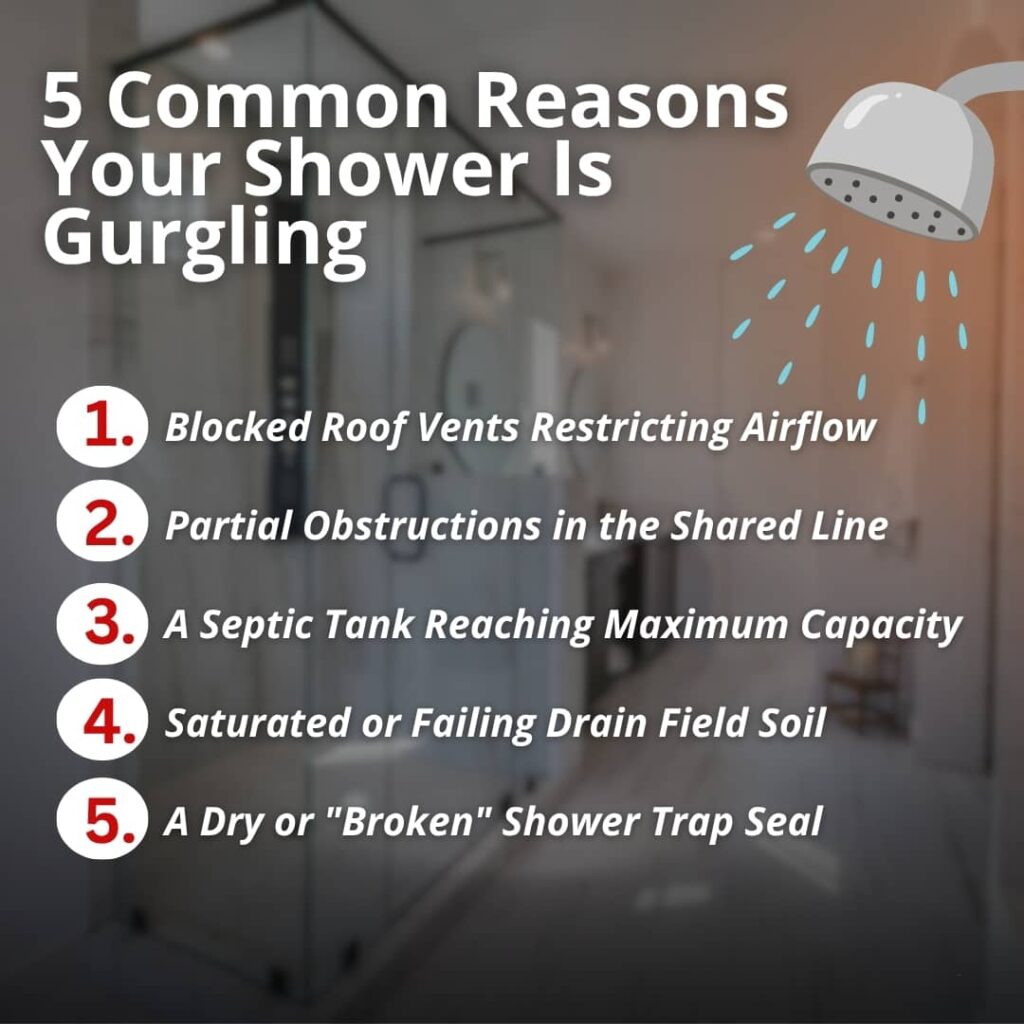
Most Common Causes of a Gurgling Shower
Your shower should be a place for singing, not strange sound effects. If your drain is starting to talk back to you, it’s usually a sign that one of these common plumbing culprits is at work.
A Blocked Vent Stack
Every drain in your home connects to a vent pipe that runs up through the roof. That vent stack allows proper airflow into the drainage system so wastewater can move freely through the pipes without creating a vacuum.
When the vent stack gets blocked by leaves, debris, or bird nests, the drainage system loses its air pressure balance, and gurgling sounds spread to the shower, bathtub, sinks, and other fixtures throughout the house.
Checking the plumbing vent for debris like leaves, nests, or buildup is crucial for maintaining proper airflow in the system, and it is one of the first things worth doing when a gurgling noise has recently started.
Without proper airflow, flushing the toilet creates a pressure drop that pulls air up through the shower drain and into the room. A clogged vent is one of the most common causes of this plumbing problem in Tampa Bay homes, where subtropical weather pushes debris into roof vents year-round.
A Partial Clog in the Drain Line
A partial obstruction in the shared drain line between your toilet and shower can cause water from a flush to push past the blockage and send a pressure wave back through connected fixtures. That wave produces a gurgling sound at the shower drain, bathtub, bath floor drain, tub, and sinks throughout the house.
Partial clogs in the main sewer line reduce the capacity of the pipes and cause issues with drainage and airflow. This kind of blockage builds gradually from hair, grease, and soap buildup. You may notice the shower, bathtub, and sinks draining more slowly before the gurgling noise starts, or hear a bubbling sound at the toilet bowl after a flush.
To fix gurgling sounds from a drain line clog, start with a plunger to dislodge the blockage. If plunging does not clear it, a drain snake or auger can reach deeper into the sewer line. Use appropriate safety equipment when snaking a line, especially if you are unfamiliar with the job. If the clog persists after both, it is time for a professional plumber or septic technician to take a look.
A Full Septic Tank
On a septic system, a gurgling shower after you flush the toilet is often one of the first signs the tank needs attention. When the tank is full or close to capacity, there is nowhere for new wastewater to go. It backs up in the drain line, and that pressure finds its way into every connected fixture in the house, including the shower drain, bathtub, bath drain, and sinks.
Most residential septic tanks need to be pumped every three to five years. Tampa Bay’s rainy season, running June through September, raises the water table and puts added pressure on a system that is already close to capacity. A tank that seems fine in the spring can start showing plumbing problems by midsummer when more water is flowing through the system daily.
Drain Field Stress or Failure
If the gurgling noise happens in the shower, sinks, bathtub, and tub throughout the house, the issue may be further downstream in the drain field. When a drain field becomes saturated, the drainage system backs up, and pressure shows up at your fixtures first.
Clogged or damaged pipes leading to the drain field can also cause hidden leaks that lead to water damage and create conditions for mold and mildew if left unaddressed. Soggy ground near the drain field, sewer gases outside, and unusually green grass over the system are all warning signs that the problem has moved beyond your plumbing and into the soil.
A Dry or Failing Shower Trap
Every shower has a trap, a curved section of pipe that holds trap water and blocks sewer gases from entering the home.
If the shower trap dries out, usually in a bathtub or bath fixture that does not get used often, it loses its water seal and allows air and sewer gases to break back through the drain freely, producing a gurgling noise or foul smell in the room.
Running water in the shower for a minute or two will refill the trap water and stop the sound in this case. A garden hose can also flush out a slow or partially blocked shower trap from the drain opening.
If the gurgling sound continues after that, the cause is something else in the system and is worth investigating further.
How to Tell If It Is a Plumbing or Septic Issue
| What You’re Noticing | Likely Cause |
|---|---|
| The shower gurgles when the toilet is flushed only | Shared drain line clog or vent pipe issue |
| Slow drains at sinks, tub, and bathtub | Full septic tank or drain field stress |
| Gurgling sound plus sewer gases indoors | Blocked vent, dry trap, or tank backup |
| Gurgling plus wet yard near the drain field | Drain field saturation or failure |
| Bubbling toilet bowl or bubbling at multiple fixtures | Main sewer line blockage or full tank |
| Gurgling noise in one fixture, nothing else is off | Localized trap or minor vent problem |
A bubbling toilet often indicates a drain or main sewer line blockage that can cause wastewater to backflow into the home.
When that pairs with a gurgling shower, the combination is a strong warning sign of a system-wide plumbing issue that needs professional attention immediately.
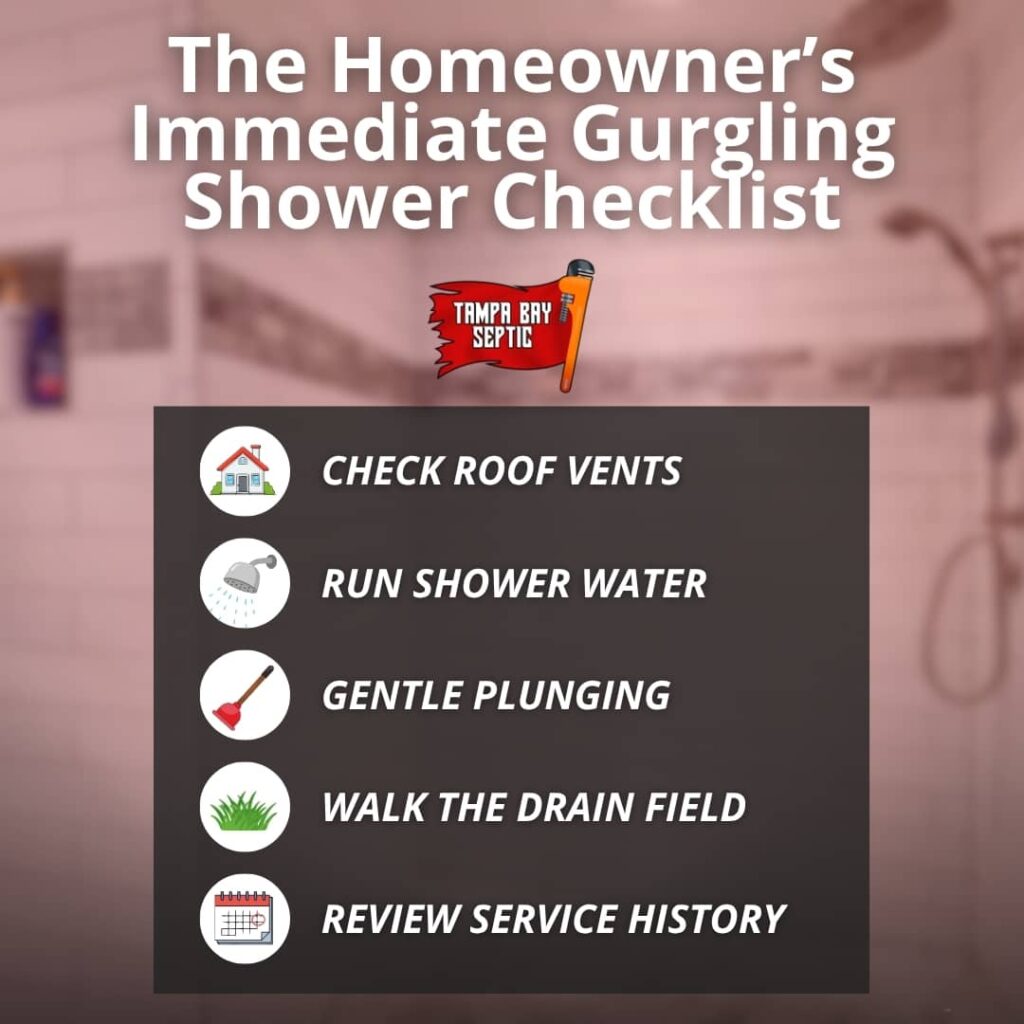
What You Can Do Right Now
- Check the roof vent opening. Look for visible debris around the vent stack from the ground. After a storm, leaves and nests are the most common culprits blocking proper airflow through the vent pipe.
- Run water in the shower. If a dry shower trap is behind the noise, a few minutes of running water should refill the trap water and stop the gurgling sound. A garden hose works well for flushing more water through the drain opening if needed.
- Try a plunger on the shower drain. For minor clogs near the surface, plunging can restore normal flow to the shower, bathtub, and connected fixtures. Follow up with a drain snake if plunging does not fix the clog completely.
- Walk the drain field area. Look for soft ground, sewer gas odors, or grass that is noticeably greener than the surrounding areas. These are warning signs that the drain field may be saturated and the drain system is under stress.
- Check your pumping history. If it has been more than three to five years since the tank was last pumped, that could easily be the first place the problem started. Scheduling a pump-out and inspection together is the most efficient next step.
- Regular maintenance, including cleaning vent openings and using enzyme-based drain cleaners, can help prevent gurgling noise from gradual buildup and blockages in the plumbing system before they become harder to fix.
Other Related Questions
How often should a septic tank be pumped?
Most residential tanks need pumping every three to five years, though household size, water usage, and tank capacity all affect that timeline. Staying on a consistent pumping schedule is one of the most effective ways to protect the drain field and extend the life of the whole system.
What are the signs of drain field stress?
Soggy or unusually green patches over the drain field, sewer gases outside, and slow drains at sinks, bathtubs, and tubs throughout the house are the most common indicators. Drain field problems develop gradually, and catching them early keeps more repair options available before full replacement becomes necessary.
What does a septic tank inspection cover?
A septic inspection is a professional evaluation of the entire system, including the tank, baffles, drain field, and any additional components like pumps or lift stations. It gives homeowners a clear picture of where things stand, whether for routine maintenance or as part of a real estate transaction.
Do aerobic and advanced treatment systems need more maintenance?
Yes. Aerobic treatment units treat wastewater more thoroughly than conventional systems, but have more components that require regular servicing. Florida DEP rules typically require an active maintenance contract for aerobic system owners, so staying current on that schedule matters.
What should homeowners know about lift stations?
Lift stations include mechanical components that can fail without warning. A pump failure can cause fast backups if it goes unnoticed, which is why lift stations need to be included in any routine septic service visit to catch issues before they become emergencies.
When to Call a Professional
Some gurgling symptoms can wait a day while you check the basics. Call a licensed septic technician right away if you notice any of the following:
- Sewer gases or sewage odor inside the home
- Bubbling or slow drainage at sinks, tubs, bathtubs, or the shower throughout the house
- Wet or soggy ground near the drain field that does not dry out
- A bubbling toilet bowl or fixtures backing up
- Visible sewage or discolored water in the yard
- The tank has not been pumped in five or more years
If blockages in the plumbing system cannot be resolved through basic methods, a plumber or licensed septic professional can perform a deeper inspection to identify the root cause and get the job done safely.
Any combination of these warning signs alongside a gurgling shower means the system needs attention now, not later.
Conclusion
A shower that gurgles when the toilet is flushed is easy to put off, but on a septic system, it is almost always pointing to something real.
Whether it is a clogged vent stack, a partial sewer line blockage, a full tank, or early drain field stress, the gurgling stage is the best time to act and the easiest time to fix it.
Tampa Bay Septic has served homeowners across Tampa, Brandon, Clearwater, Palm Harbor, Wesley Chapel, Spring Hill, Sarasota, and communities throughout Florida for more than 25 years.
Whether you need a pump-out, a full inspection, a drain field repair, or just help figuring out what is going on, the team is ready.
Get a quote or schedule a visit today.

![FAQs about Septic Systems [infographic]](https://tampabayseptic.com/wp-content/uploads/2020/10/124766-Tampa-Bay-Septic_Approved-feat.jpg)