
When something goes wrong with a septic system, many homeowners immediately worry about worst-case scenarios. Septic issues can be messy, stressful, and expensive if they are not handled the right way. One of the most common questions Tampa Bay homeowners ask is whether a septic problem can be repaired or if replacing a septic tank is the better long-term choice.
This decision is not always obvious. Some septic issues are minor and can be resolved with maintenance or targeted repairs. Others signal that the tank itself is no longer doing its job, and replacement is the safest path forward.
In the Tampa Bay area, local conditions like high groundwater levels, heavy rainfall, sandy soil, and aging systems all affect how long septic tanks last and how well they perform. This guide explains how septic tanks fail, what warning signs matter most, and how to know when replacing a septic tank is truly the best option.
How a Septic Tank Is Supposed to Work
A septic tank is designed to collect wastewater from the home and separate solids from liquids. Solids settle at the bottom, lighter materials float to the top, and liquid waste flows out to the drain field for further treatment.
When a septic tank is working properly, this process happens quietly and efficiently. Problems begin when the tank can no longer separate or contain waste as intended.
Understanding this basic function helps explain why some issues can be repaired while others require replacement.
How Long Septic Tanks Typically Last
Septic tanks are not permanent. Their lifespan depends on material, installation quality, usage, and local conditions.
Typical lifespans include:
- Concrete septic tanks often last 30 to 40 years or more with proper maintenance
- Fiberglass and plastic tanks may last longer, but are sensitive to installation and soil conditions
- Steel tanks often fail much sooner due to corrosion and are no longer commonly installed
In Tampa Bay, high water tables and saturated soils can shorten the lifespan of older tanks. Many homes still have original systems that were installed before modern standards accounted for these challenges.
If your septic tank is several decades old, age alone may be a reason to evaluate replacement.

Septic Maintenance vs Repair vs Replacement
One of the biggest sources of confusion for homeowners is understanding the difference between these options.
Routine Septic Maintenance
Maintenance focuses on keeping a healthy system functioning properly. This includes regular pumping, inspections, and monitoring usage.
Maintenance is effective when the tank structure is intact, and the system is still performing as designed.
Septic Repairs
Repairs address specific problems while keeping the existing tank in place. Common repairs include fixing inlet or outlet pipes, replacing baffles, or addressing minor drain field issues.
Repairs make sense when problems are isolated, and the tank itself is structurally sound.
Septic Tank Replacement
Replacement involves removing the old tank and installing a new one that meets current standards. This option is typically recommended when the tank is failing, damaged, or no longer compatible with site conditions.
Replacement focuses on long-term reliability rather than repeated short-term fixes.
Signs That Replacing a Septic Tank May Be the Best Option
Some warning signs suggest that repairs alone may not be enough.
Frequent Sewage Backups
Occasional clogs can happen, but recurring sewage backups inside the home often indicate that the tank is no longer processing waste properly.
If pumping or repairs do not resolve the issue, replacement may be necessary.
Strong or Persistent Sewage Odors
Sewage odors around the tank, drain field, or inside the home can signal cracks, leaks, or failing seals. Odors that return after service are a strong indicator of deeper problems.
Standing Water or Saturated Ground
Pooling water or constantly soggy soil near the septic tank or drain field often means the system cannot handle wastewater effectively.
In Tampa Bay, where rain and groundwater are already present, this symptom should not be ignored.
Structural Damage to the Tank
Cracks, corrosion, or collapsed sections found during inspections usually mean the tank has reached the end of its useful life. Structural damage is rarely solved with repairs alone.
Ongoing Problems Despite Repeated Service
When septic issues keep returning after pumping or repairs, the cost of continued service can quickly exceed the cost of replacement.
This pattern often signals that the tank itself is the root issue.
Why Tampa’s Conditions Push Some Systems Toward Replacement
Local conditions play a major role in septic system performance.
High Groundwater Levels
Many areas of Tampa Bay have naturally high water tables. Rising groundwater can interfere with septic tank operation and reduce treatment efficiency.
Older tanks were often installed without accounting for these conditions, making replacement a practical upgrade.
Heavy Rainfall and Storm Activity
Intense rain events can overwhelm aging systems. Excess water entering the tank or surrounding soil can cause backups and failures.
Newer systems are designed to better handle these conditions.
Sandy Soil and System Shifting
Sandy soils drain quickly, but can also allow tanks to shift if they are not installed correctly. Over time, shifting can damage pipes and tank connections.
Replacement allows systems to be reinstalled and stabilized properly.
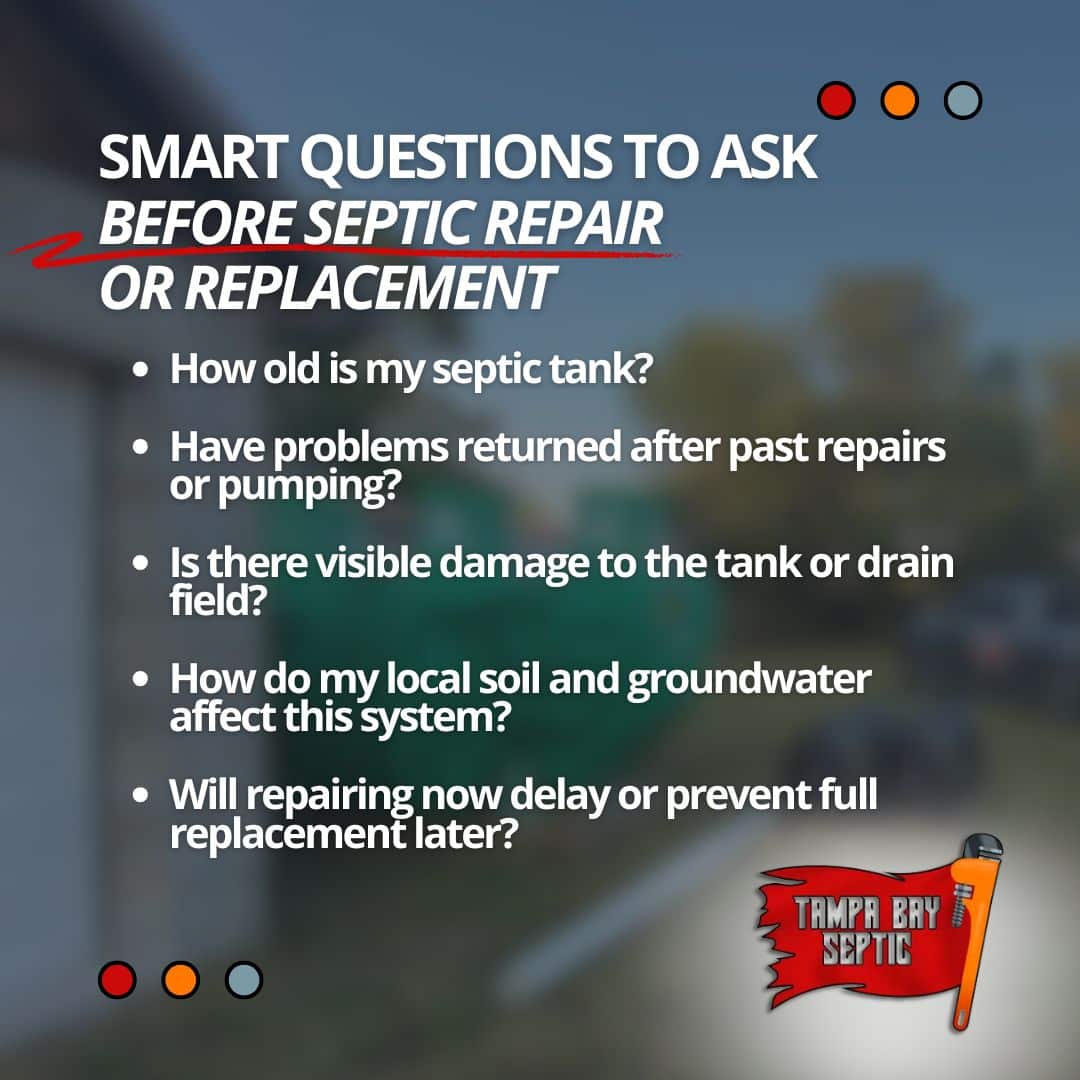
How Septic Professionals Help Guide the Replace or Repair Decision
A professional septic inspection is the most reliable way to determine whether replacement is necessary.
Their evaluations will consider:
- Tank material and condition
- Signs of leakage or structural failure
- System capacity compared to household use
- Drain field performance
This information allows homeowners to make informed decisions instead of guessing or reacting to emergencies.
What Replacing a Septic Tank Typically Involves
Replacing a septic tank is a planned process when handled early.
The process generally includes:
- Evaluating the property and system design
- Obtaining required permits
- Removing the old tank
- Installing a new tank that meets current standards
- Connecting and testing the system
While replacement is a major project, planning ahead helps minimize disruption and unexpected costs.
Why Waiting Too Long Can Make Things Worse
Delaying septic tank replacement can lead to:
- Emergency system failures
- Property damage
- Health and safety concerns
- Higher cleanup and repair costs
Addressing replacement before a complete failure allows homeowners to control timing and budget.
How Tampa Bay Septic Helps Homeowners
Tampa Bay Septic provides septic inspections, pumping, repairs, full septic system replacement, and flexible financing options throughout the Tampa Bay area.
Their team helps homeowners understand:
- Whether a system can be maintained or repaired
- When replacement is the safer long-term option
- How to plan next steps based on property conditions
By evaluating each system individually, Tampa Bay Septic helps homeowners avoid unnecessary work while addressing real risks.
Related Questions Homeowners Often Ask
Can a septic tank be replaced without replacing the drain field? Sometimes. It depends on the drain field condition and compatibility with the new tank.
Does increased household size affect septic lifespan? Yes. Higher usage can shorten the lifespan, especially if the system was not designed for the current demand.
Is septic tank replacement required when selling a home? Not always. Inspections determine whether replacement is needed before closing.
Can pumping fix a failing septic tank? Pumping is maintenance, not a fix for structural or design issues.
When to Call a Septic Professional
You should contact a septic professional if:
- Sewage backups occur repeatedly
- Odors persist around the system
- Standing water appears near the tank or the drain field
- Your system is decades old
- You are buying or selling a home
Early evaluation helps prevent emergencies.
Conclusion
Replacing a septic tank is not always the first step, but in many cases it is the most reliable long-term solution. In the Tampa Bay area, local soil, water, and weather conditions can accelerate wear and make replacement necessary sooner than homeowners expect.
Understanding how septic systems fail and knowing when replacement is the right call helps protect your property, health, and investment. With proper inspection and planning, septic tank replacement can be handled proactively instead of reactively. Book a visit with trusted, local professionals today.

![FAQs about Septic Systems [infographic]](https://tampabayseptic.com/wp-content/uploads/2020/10/124766-Tampa-Bay-Septic_Approved-feat.jpg)