
This guide walks through a simple septic tank diagram, explaining how each part functions and why regular inspections are so important for homes in Florida’s climate. At Tampa Bay Septic, we install, inspect, and maintain systems across the Tampa Bay area to keep homes and the environment safe.
If your home uses a septic system, it’s working hard behind the scenes every day. This buried system quietly handles thousands of gallons of wastewater each week, treating it naturally through bacteria and soil filtration.
Understanding how it works can help you prevent breakdowns, extend the system’s lifespan, and avoid expensive repairs.
Understanding the Typical Basic Septic System
A standard septic system includes three main parts: the inlet line, the septic tank, and the drainfield (also called the leach field). Each plays a vital role in separating, treating, and filtering household wastewater.
When all parts function properly, the system quietly treats wastewater beneath the surface. But if one component becomes overloaded or clogged, it can trigger slow drains, unpleasant odors, or even groundwater contamination.
|
Component |
Description |
Purpose |
|
Inlet Pipe |
Connects your plumbing to the septic tank |
Moves wastewater from toilets, sinks, and drains |
|
Septic Tank |
A watertight underground container |
Holds and separates solids, liquids, and grease |
|
Baffles |
Partitions near the inlet and outlet |
Keep solids from escaping the tank too soon |
|
Outlet Pipe |
Connects the tank to the drainfield |
Transfers clarified liquid (effluent) for soil treatment |
|
Drainfield |
Network of perforated pipes in gravel trenches |
Filters effluent through soil for final cleaning |
|
Vent and Soil Cover |
Allow air circulation and protection |
Prevent odor buildup and protect the system below ground |
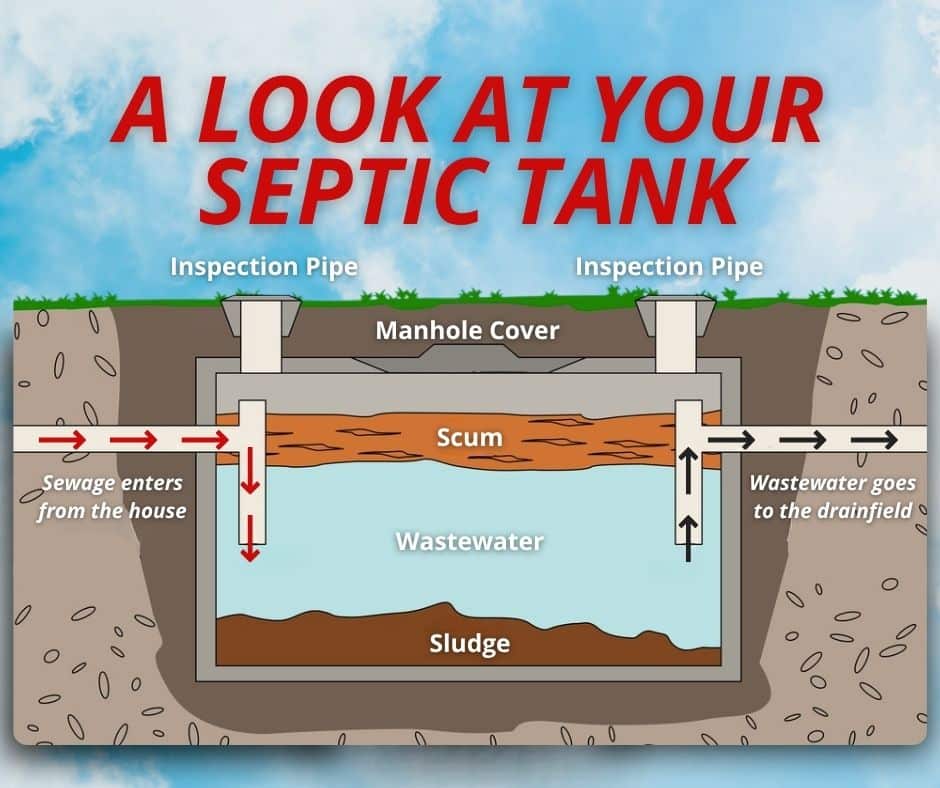
Key System Components to Recognize
Even though most of your septic system is underground, knowing its basic parts can help you spot problems early.
- Septic Tank: Made of concrete, fiberglass, or plastic, typically holds 1,000 to 1,500 gallons.
- Baffles: Keep solids contained, preventing clogging in downstream components.
- Access Lids: Allow technicians to pump and inspect the tank without digging. These should always be easy to locate.
- Drainfield Lines: Perforated pipes that distribute wastewater evenly for natural filtration.
- Vent Pipes: Let gases escape safely and maintain internal air pressure.
- Distribution Box: Found in some systems, it helps balance effluent flow across the drainfield.
- These components work together continuously, and Tampa Bay Septic’s licensed technicians inspect each during every service visit.
How Does a Septic System Work?
Before you can maintain a septic system, it helps to understand what happens after every flush or drain cycle. Each stage in the process has a specific purpose, and when one step fails, the entire system can start to struggle.
1. Wastewater Leaves the Home
Every time you flush or run a faucet, water flows into the septic tank through the inlet pipe. The EPA estimates that U.S. households send an average of 300 gallons of wastewater per day into their systems. That’s why correct sizing and regular pumping are essential for performance.
2. Separation Inside the Tank
Inside the septic tank, wastewater naturally separates into three layers:
- Scum: Grease and oils float to the top
- Effluent: Liquid wastewater in the middle
- Sludge: Heavy solids that settle at the bottom
Bacteria inside the tank help break down solids, but buildup is inevitable. If not pumped out every 3 to 5 years, solids can overflow into the drainfield and cause failure.
3. Effluent Moves to the Drainfield
The middle layer, or effluent, exits the tank through the outlet pipe and flows into the drainfield. There, it seeps through perforated pipes surrounded by gravel and soil.
As the water filters through, microbes in the soil remove harmful bacteria, viruses, and nutrients. According to the Florida Department of Environmental Protection (FDEP), a well-designed drainfield can remove up to 90% of pathogens before the water reenters groundwater.
4. The Soil Finishes the Process
The soil completes the treatment by absorbing remaining impurities. If the drainfield becomes saturated, compacted, or clogged, the process slows or stops entirely, leading to standing water or sewage backups.
Routine inspection prevents this by catching small issues like partial blockages or poor drainage before they escalate.
What Septic System Types Are Common in Florida?
Not every home uses the same design. Soil type, water table height, and property size determine the right setup.
|
System Type |
How It Works |
Best For |
|
Conventional Gravity System |
Uses gravity to move effluent through the tank and drainfield |
Homes with sandy, well-draining soil |
|
Adds oxygen to accelerate bacterial treatment |
Small lots or homes near water sources |
|
|
Mound System |
Builds a raised drainfield above ground with sand and gravel layers |
Properties with shallow soil or high groundwater |
|
Low-Pressure Dosing System |
Uses a pump to distribute effluent evenly |
Sloped or uneven terrain |
An inspection from Tampa Bay Septic can confirm which system you have and ensure it’s performing efficiently and meeting Florida code.
Early Signs of Septic System Issues
A healthy system runs quietly, but subtle warning signs often appear before serious trouble begins.
Watch for:
- Slow-draining toilets, tubs, or sinks
- Gurgling sounds in pipes
- Sewage odors near drains or outdoors
- Standing water over the tank or drainfield
- Patches of bright green grass in one area of the yard
Nearly 25% of septic systems show early warning signs due to a lack of maintenance. Addressing these signs quickly can prevent expensive repairs and environmental damage.

Maintenance Habits to Keep Your Tank & System Healthy
Good maintenance is what separates a reliable septic system from a failing one. Keep these routine care tips in mind!
- Pump the tank every 3–5 years.
- Have a full system inspection every 1–3 years.
- Space out large water uses, like laundry and showers.
- Keep grease, coffee grounds, and chemicals out of drains.
- Plant only grass above your drainfield.
- Divert gutter runoff and irrigation away from septic areas.
The EPA notes that consistent maintenance can double a system’s lifespan, keeping it functional for 40 years or more. Tampa Bay Septic offers service plans to help homeowners stay on schedule without guesswork.
Why Professional Inspections Are Essential
Even well-maintained systems need periodic inspections to confirm everything below ground is functioning properly. Professional inspections evaluate:
- Sludge and scum buildup levels
- Tank structure and watertightness
- Condition of baffles and filters
- Flow distribution in the drainfield
- Soil absorption rates and potential blockages
- Compliance with current Florida environmental standards
Technicians use specialized equipment to measure, test, and document system performance accurately. If you can’t remember your last inspection, notice slow drains, or have recently moved into a new home, now is the time to book a professional checkup.
Tampa Bay Septic serves homeowners throughout the area with reliable inspections, maintenance, and pumping services. Our technicians provide expert evaluations that keep your system working safely and efficiently.
Related Questions
How Do I Find My Septic Tank? Most tanks are 10–25 feet from the house. Professionals use location probes, ground radar, or plumbing cameras to pinpoint them.
Can I Build or Park Over My Septic System? No. The added weight can crush underground pipes and restrict access for maintenance. Always keep the area marked and clear.
Are Additives or Enzymes Necessary? Usually not. A balanced system already supports healthy bacteria naturally. Additives often provide little benefit and may disrupt the ecosystem.
How Long Should My Septic System Last? With proper care, most systems last between 25 and 40 years, depending on soil quality, water usage, and pumping frequency.
Conclusion
Your septic system might be out of sight, but it should never be out of mind. Knowing how it functions helps you protect your home, your property value, and your local environment.
At Tampa Bay Septic, we make maintenance simple through expert inspections, honest recommendations, and dependable service. Whether you need a routine checkup or help troubleshooting a concern, our team ensures your system runs safely and efficiently year after year.
Contact Tampa Bay Septic today to schedule your inspection and keep your septic system working the way it should.