
A bubbling toilet is one of the earliest and most important warning signs that a septic system is struggling to move wastewater the way it should. In septic homes, this usually means something is blocking the system’s airflow, slowing drainage, or causing pressure to build in the lines.
This matters more in the Tampa Bay region than in most parts of the country. Our homes sit on sandy and clay blends, shallow water tables, and flood-prone zones. We also get heavy rainfall, tropical storms, and summer downpours that raise groundwater levels fast. All of these factors put septic systems under extra stress and make bubbling a symptom you should never ignore.
This guide explains why your toilet may bubble, how Tampa Bay’s environment plays a role, and how a septic professional can diagnose the problem before it becomes a costly backup.
What Toilet Bubbling Usually Means in a Septic Home
Toilet bubbling is a pressure imbalance. When wastewater cannot move through your septic system smoothly, air becomes trapped and pushes back through the toilet.
Early warning signs often include:
- Bubbling after flushing
- Gurgling when the shower or washer drains
- Slow sinks and tubs
- Wastewater levels are rising or dipping
- Odors coming from drains
According to the Environmental Protection Agency, drainage changes often begin weeks before an actual backup. Bubbling is one of the earliest warnings homeowners get.
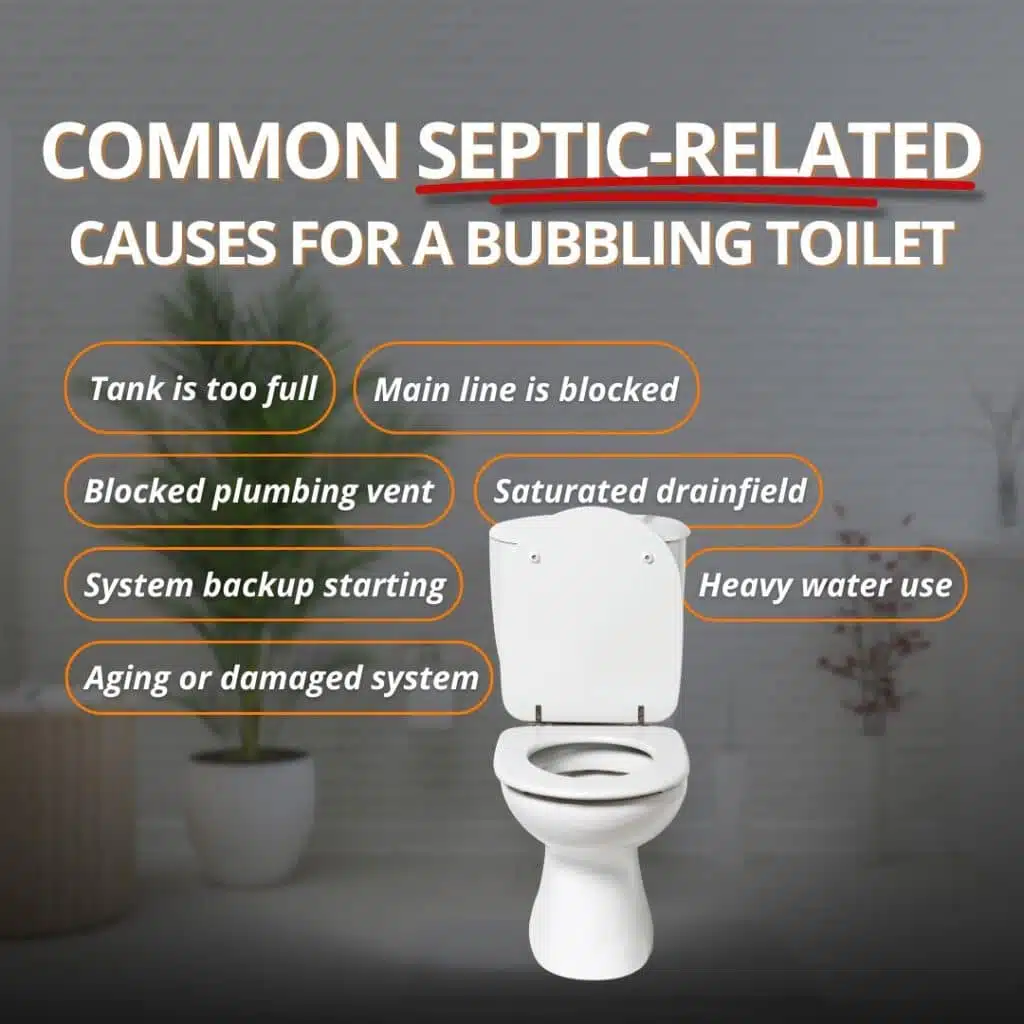
Reason 1: The Septic Tank Is Too Full
A full tank reduces the available space for wastewater to settle. When the sludge rises too high, the wastewater backs up, and airflow becomes restricted.
The Florida Department of Health recommends pumping every three to five years, depending on tank size and water use. Many Tampa Bay homes exceed that window due to higher rainfall, frequent garbage disposal use, or older tanks.
Signs a full tank may be causing bubbling:
- Slow drainage throughout the home
- Bubbling during showers
- Odors outdoors near the tank
- Wet soil over the tank lid
If you cannot remember the last pump-out, this is one of the first possibilities to check.
Reason 2: A Blocked or Sluggish Main Line
If the main line between your home and septic tank slows down, trapped air escapes through the toilet.
Blockages in Tampa Bay often come from:
- Grease buildup
- Food waste from garbage disposals
- Tree root intrusion in older pipes
- Sand or soil movement after heavy rains
- Personal products or wipes that do not break down
The National Association of Sewer Service Companies reports that partial blockages can cause bubbling and gurgling long before a full clog forms.
You may notice:
- Water backing into tubs or showers
- Gurgling in multiple rooms
- Bubbling when appliances drain
A system inspection with specialized equipment is the most reliable way to confirm this issue.
Reason 3: A Blocked or Damaged Vent Pipe
Your plumbing system uses a roof vent to balance airflow. If that vent is blocked, pressurized air has to escape somewhere, and the toilet becomes the easiest outlet.
Vent failures are common in Tampa Bay due to:
- Storm debris
- Leaves, nests, or insects inside the vent
- Corrosion from salt air
- Roof damage after strong wind events
If bubbling happens mainly when large amounts of water drain, venting is often the problem.
Reason 4: A Saturated or Failing Drainfield
Drainfield saturation is one of the most common causes of toilet bubbling during rainy periods. Tampa Bay’s water table rises quickly after storms and seasonal rainfall. When the soil becomes saturated, wastewater cannot filter into the ground.
Instead of flowing outward, wastewater slows or reverses direction. Air pressure then pushes back toward the home.
The Southwest Florida Water Management District notes that seasonal rainfall increases groundwater levels significantly, which slows septic absorption.
Even a well-maintained system can struggle temporarily after major storm events.
Drainfield saturation signs include:
- Bubbling during or after rain
- Standing water above the drainfield
- Lush green patches over the drainfield
- Odors outdoors
- Slow drainage in every fixture
A failing or waterlogged drainfield should be reviewed immediately by a professional.
Reason 5: A Backup Beginning Inside the Home
A partial backup often starts quietly. Toilets bubble as pressure builds in the lines. Showers may drain more slowly. Sinks may make gurgling sounds as air shifts through the system.
You may also notice:
- Water rises in the tub when the toilet flushes
- Gurgling from distant sinks
- Wastewater is slowing throughout the home
- Odors inside bathrooms
Backups are one of the most serious septic problems because wastewater can re-enter the home. This is a sanitation and property damage concern that requires immediate inspection.
Reason 6: Heavy Water Use in a Short Time
If too much water enters the system at once, the tank cannot settle, filter, and move wastewater fast enough.
Short-term high flow is common when:
- Running many loads of laundry
- Hosting visitors
- Using long showers back-to-back
- Running water-heavy appliances in one window of time
This issue can become worse during rainy weeks when the drainfield is already slow.
Reason 7: System Age, Settling, or Hidden Damage
Many septic systems in Tampa Bay are older and sit on shifting soils or areas that flood or oversaturate during summer rains. Older pipes, older tank lids, and aging drainfields wear down faster in this environment.
Damage can include:
- Pipe slope changes from soil movement
- Cracked or crushed drain lines
- Settled areas in the drainfield
- Roots entering the tank or lines
- Broken baffles inside the tank
When something inside the system fails, bubbling is often one of the first symptoms homeowners notice.
How a Septic Professional Identifies the Real Cause
Because bubbling can come from several parts of the system, the fastest and safest way to fix it is with a full septic diagnostic performed by a trained professional.
Tampa Bay Septic provides detailed inspections designed to pinpoint the real cause, not guesswork.
A professional evaluation may include:
- Tank level assessment to check for overfilling
- Full pump-out to reset the system
- Camera inspection of the main line
- Flow testing to see how wastewater moves
- Drainfield performance review
- Soil saturation checks after storms
- Inspection of roof vent openings
- Checking for tank or pipe damage
- Locating hidden leaks or root intrusion
These steps help determine whether the problem is a simple fix or a sign of a more serious issue that needs attention.
A professional inspection does more than diagnose bubbling. It protects your property, prevents backups, reduces repair costs, and ensures your septic system meets local and state requirements.
Why Calling a Professional Early Matters
Waiting can turn a minor airflow issue into a complete system failure. The Centers for Disease Control warns that wastewater exposure carries significant health risks. Backups also damage flooring, walls, and personal belongings. Restoration costs can reach thousands of dollars.
Calling a professional early helps because:
- Problems are cheaper to fix when caught early
- A pump-out may prevent a backup
- Professionals can identify code or safety issues
- Diagnostic tools reveal hidden problems that homeowners cannot see
- Drainfield issues can be corrected faster when addressed early
- Seasonal storms make delays riskier
Toilet bubbling is one of the few warning signs you get before a backup. Treating it early protects your home.
Other Helpful Questions
Why does the toilet bubble when it rains? Rain often saturates the drainfield, which slows water flow and traps air. Tampa Bay’s shallow water tables make this more common.
Why does the toilet bubble when the shower runs? This usually means the main line is blocked or slow. The shower water forces air back through the toilet.
Is bubbling always a septic problem? Most of the time, yes. Plumbing-only vent issues are also possible, but bubbling is one of the clearest indicators of septic strain.
Can pumping the tank fix bubbling? Pumping helps if the tank is full. If the issue is in the main line, vent, or drainfield, pumping alone will not solve it. This is why a full diagnostic is important.
When to Call Tampa Bay Septic
Call a professional right away if:
- Bubbling happens more than once
- Bubbling becomes louder or more frequent
- Drains slow throughout the home
- You smell sewage indoors or outdoors
- Bubbling starts during rain
- Water pools near the drainfield
- The tank has not been pumped in several years
Tampa Bay Septic offers complete septic inspections, tank pumping, line cleaning, drainfield evaluations, repairs, and new system design when needed. The goal is to find the real cause early, protect your home, and keep your septic system running safely through Tampa Bay’s weather and soil conditions.
Conclusion
A bubbling toilet is one of the clearest signs that a septic system is under stress. Whether the cause is a full tank, a clog, a blocked vent, or a saturated drainfield, early attention helps prevent backups and costly repairs. Tampa Bay’s weather, soil, and high groundwater levels create unique challenges that make fast action even more important.
If your toilet has started bubbling, Tampa Bay Septic can diagnose the issue, protect your home, and keep your system working safely and reliably.

![FAQs about Septic Systems [infographic]](https://tampabayseptic.com/wp-content/uploads/2020/10/124766-Tampa-Bay-Septic_Approved-feat.jpg)